Books

BigGayDeal.com

Sinclair Lewis' 'Main Street' And Perceived Homosexuality

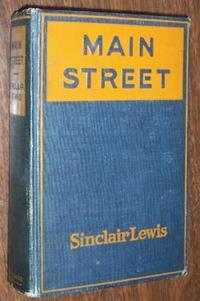
Mainstreet2 I have spent a good chunk of my past month working through Sinclair Lewis' 1920 novel, Main Street.

It is an excellent book and I highly recommend you, reader, take a gander at the tale of a "big city" girl who moves to a small American town.

If you have no interest or time, however, I would like to highlight a small passage from the novel: the entrance of pivotal character Erik Valborg, who the townspeople paint as a "freak" for his effeminate manner.

I've included the passage below. It really speaks volumes about how discrimination against perceived homosexuality has been a plight on our society for far too long. Without spoiling too much, Erik is not gay.

Well, not yet -- I have about 75 pages left, so maybe he'll "turn"?

Read the excerpt, AFTER THE JUMP...

Carol was fond of Maud Dyer, because she had been particularly agreeable lately; had obviously repented of the nervous distaste which she had once shown. Maud patted her hand when they met, and asked about Hugh.

Kennicott said that he was "kind of sorry for the girl, some ways; she's too darn emotional, but still, Dave is sort of mean to her." He was polite to poor Maud when they all went down to the cottages for a swim. Carol was proud of that sympathy in him, and now she took pains to sit with their new friend.

Mrs. Dyer was bubbling, "Oh, have you folks heard about this young fellow that's just come to town that the boys call 'Elizabeth'? He's working in Nat Hicks's tailor shop. I bet he doesn't make eighteen a week, but my! isn't he the perfect lady though! He talks so refined, and oh, the lugs he puts on--belted coat, and pique collar with a gold pin, and socks to match his necktie, and honest--you won't believe this, but I got it straight--this fellow, you know he's staying at Mrs. Gurrey's punk old boarding-house, and they say he asked Mrs. Gurrey if he ought to put on a dress-suit for supper! Imagine! Can you beat that? And him nothing but a Swede tailor--Erik Valborg his name is. But he used to be in a tailor shop in Minneapolis (they do say he's a smart needle-pusher, at that) and he tries to let on that he's a regular city fellow. They say he tries to make people think he's a poet--carries books around and pretends to read 'em. Myrtle Cass says she met him at a dance, and he was mooning around all over the place, and he asked her did she like flowers and poetry and music and everything; he spieled like he was a regular United States Senator; and Myrtle--she's a devil, that girl, ha! ha!--she kidded him along, and got him going, and honest, what d'you think he said? He said he didn't find any intellectual companionship in this town. Can you BEAT it? Imagine! And him a Swede tailor! My! And they say he's the most awful mollycoddle--looks just like a girl. The boys call him 'Elizabeth,' and they stop him and ask about the books he lets on to have read, and he goes and tells them, and they take it all in and jolly him terribly, and he never gets onto the fact they're kidding him. Oh, I think it's just TOO funny!"

The Jolly Seventeen laughed, and Carol laughed with them. Mrs. Jack Elder added that this Erik Valborg had confided to Mrs. Gurrey that he would "love to design clothes for women." Imagine! Mrs. Harvey Dillon had had a glimpse of him, but honestly, she'd thought he was awfully handsome. This was instantly controverted by Mrs. B. J. Gougerling, wife of the banker. Mrs. Gougerling had had, she reported, a good look at this Valborg fellow. She and B. J. had been motoring, and passed "Elizabeth" out by McGruder's Bridge. He was wearing the awfullest clothes, with the waist pinched in like a girl's. He was sitting on a rock doing nothing, but when he heard the Gougerling car coming he snatched a book out of his pocket, and as they went by he pretended to be reading it, to show off. And he wasn't really good-looking--just kind of soft, as B. J. had pointed out.

When the husbands came they joined in the expose. "My name is Elizabeth. I'm the celebrated musical tailor. The skirts fall for me by the thou. Do I get some more veal loaf?" merrily shrieked Dave Dyer. He had some admirable stories about the tricks the town youngsters had played on Valborg. They had dropped a decaying perch into his pocket. They had pinned on his back a sign, "I'm the prize boob, kick me."

Glad of any laughter, Carol joined the frolic, and surprised them by crying, "Dave, I do think you're the dearest thing since you got your hair cut!" That was an excellent sally. Everybody applauded. Kennicott looked proud.

She decided that sometime she really must go out of her way to pass Hicks's shop and see this freak.


Feed This post's comment feed

Comments

  1. Reminds me of Sherwood Anderson's "Winesburg, Ohio" from 1919, with the story "Hands" about a brilliant former teacher who had innocently touched a young student.

    Anderson wanted to call the book "The Grotesques" but his publisher talked him out of it.

    Will definitely read this one.

    Posted by: Trev | Aug 16, 2011 4:53:12 PM


  2. The profound homophobia of our society didn't just crush gay men -- it crushed straight men who were different. Men, straight or gay, weren't allowed to like singing or acting or dressing up or reading. It was once enough to say a bloke was "musical" to imply he was gay.

    Since being gay was a crime as well as deeply socially unacceptable, straight men did their best not to be suspected of gayness, and behaved in as "manly" a way as they could. This meant they couldn't get too fond of their friends, because they might be a homo, ppl might talk. Once labelled, you could never shake it off.

    It's incredibly sad: mankind is capapable of deep emotional bonds, and because m2m bonds were seen as somehow suspect, straight men were denied the comfort of being loved by other men, even if the love was entirely non-sexual.

    Acceptance of gays will also free straight men to love other men.

    Posted by: Nick Thiwerspoon | Aug 16, 2011 4:57:25 PM


  3. I read this long enough ago that I was probably in the closet at the time, and I don't even remember this part, which makes me wonder, given the overall tone of the book which mocks the moral superiority that small town folks felt they held (sound familiar, Sarah Palin and Michelle Bachmann) over the city folk, it's hard to say that the author wasn't actually making the opposite point -- that it was STUPID to mock someone like Erik Valborg, and gossip about him behind his back, especially when it's clear he's actually straight. I think in the overall context of the book, this passage is way more ambiguous, at least from what I remember. However, I agree that it's quite a compelling novel. Well worth checking out. I love that Towleroad throws stuff like this into the mix. Thanks for writing this, Andrew!

    Posted by: Mark in Portland | Aug 16, 2011 5:05:26 PM


  4. I read most of his novels for an English class in high school and really enjoyed them (even named a cat Sinclair.) But I tried re-reading Babbitt a few years ago, and even though I know it's supposed to be satire of a yuppie-ish young businessman, I still couldn't enjoy it the same way I did when I read it 25 years ago. But important books just the same. Dodsworth and Arrowsmith are also quite fine.

    Posted by: jd1row | Aug 16, 2011 5:06:01 PM


  5. Sadly, it that time it "did not get better".

    Posted by: MikeyDallas | Aug 16, 2011 5:14:39 PM


  6. whats this? no news today?

    Posted by: jim | Aug 16, 2011 5:59:03 PM


  7. This passage reminds me of the numerous threads here devoted to "outing" Michele Bachmann's husband. I wonder if Andrew Belonski had this in mind.

    Posted by: AG | Aug 16, 2011 6:03:26 PM


  8. His home in Gopher Prairie, Minnesota is now a museum. The town's folk are very proud of their son.

    I bought a clip on tie for my cousin's wedding in the town - it was the only tie I could find, so their sense of fashion really hasn't changed much.

    Posted by: Marc | Aug 16, 2011 6:10:27 PM


  9. As I read this passage, the image of Austin Scarlet from Project Runway passed through my mind...

    Posted by: Beef and Fur | Aug 16, 2011 6:23:53 PM


  10. i've been reading that book also--weird coincidence.

    Posted by: Bryan | Aug 16, 2011 6:28:36 PM


  11. The Sinclair Lewis book everyone must read RIGHT NOW is "It Can't Happen Here" -- about a fascist takeover of the Good Ol' U.S. of A.

    Posted by: David Ehrenstein | Aug 16, 2011 6:40:06 PM


  12. Thanks for posting. It didnt get much better i guess

    Posted by: Jeff | Aug 16, 2011 6:55:41 PM


  13. old literature is a gold mine of strange homo-sexy passages -- I remember when that passage from Gatsby went around that implied that Nick and Gatsby had been in bed together at some point -- it is a remembrance by Nick in the page 30-33 range in the book of Jay shirtless in bed.... amazing what authors could slip into books back then ... so artistic and allusory where most books today would be explicit!

    Posted by: David B. | Aug 16, 2011 7:54:27 PM


  14. @ JIM

    We call them 'books'.

    Posted by: Eric26 | Aug 16, 2011 9:11:40 PM


  15. I loved MAIN STREET when I was in high school (7000 years ago). About 5 years ago, I read and really enjoyed his ANN VICKERS, which deals with a number of worrisome feminist issues, including abortion. A fine book by a writer who's mostly forgotten now and unjustly dismissed by academia.

    Posted by: Abel | Aug 16, 2011 9:23:59 PM


  16. Andrew, I love you for posting this. Honestly.

    @Abel: Never read ANN VICKERS, but now I'm wondering if the name inspired the name of the Vickers family (of which Elizabeth Taylor's character was a member) in A PLACE IN THE SUN. That film was also about some worrisome feminist issues. Well, that and Boy Scouts. And the electric chair.

    Posted by: Richard | Aug 16, 2011 10:54:09 PM


  17. I'm in 100% agreement with Mr. Ehrenstein. "It Can't Happen Here" is as timely now as it was then.
    My favorite Lewis novel (they're all good) is "Cass Timberlane". No Gays but a good book about relationships.

    Posted by: Ed Meiller | Aug 17, 2011 3:38:24 AM


  18. Believe you will love it.

    We have good reputation, fashion products,


    come here quickly== http://www.happyshopping100.com ==

    Opportunity knocks but once

    Posted by: zhongrro | Aug 17, 2011 3:43:27 AM


  19. Excellent article with essential information. I will check back again in the near future.

    Posted by: catherine | Aug 17, 2011 5:24:50 AM


  20. Great post, Andrew B.!

    While it had other meanings and while it was even the title of a 1920 film starring Douglas Fairbanks that had little to no overt gay content, the term "mollycoddle" (an epithet levied against the character in Lewis' novel) was a late 19th century and early twentieth century term for effeminate homosexual that used the same term for the gatherings of homosexuals and drags that were popular at the time in Anglophone societies: molly houses. Much gay history has been written about it.

    See http://en.wikipedia.org/wiki/Molly_house for the quick and dirty explication.

    The term now is routinely labeled as archaic, referring to an effeminate boy or man or even an overly intellectual boy or man. However, the suggestion of homosexuality is key.

    Take in mind that for men prior to WWII same-sex desire (and being the receiver in anal and oral sex) was routinely conflated with adopting the societal mannerism of the opposite sex. The studies of the major sexologists of the time point to this.

    Posted by: brenda | Aug 17, 2011 8:15:38 AM


  21. Never read Sinclair Lewis and now I might read this.

    I like this book feature at Towleroad

    Posted by: Chitown Kev | Aug 17, 2011 11:06:54 AM


  22. @RICHARD, I don't know about the use of the name Vickers in A PLACE IN THE SUN. Though that was based on Dreiser's AN AMERICAN TRAGEDY, all the characters' names were changed. ANN VICKERS was filmed very nicely with Irene Dunne, Walter Huston and the divine Edna May Oliver. The abortion is handled so discreetly that you could miss it. The movie is worth watching, I think.

    Posted by: Abel | Aug 17, 2011 11:08:41 AM


  23. Re: IT CAN'T HAPPEN HERE. I was in a Lewis "phase" in high school and read most of his books. This one is pretty much of a potboiler but is certainly worth reading in the present political climate. I recall that Lewis makes an unveiled reference to the post-takeover White House, where parties were held "with only men attending".

    My impression of Erik Valborg was that he was gay. He escaped Gopher Prairie by becoming an actor in Hollywood, and I think I recall a passage describing Carol K's sadness when she sees the kind of character he plays. That's not intended to be a spoiler. If somebody else has read MAIN STREET more recently than 1963, correct me if I've had a memory blip.

    As for male homosocial bonding in America in the 19th-mid 20th century, it was still possible to have close relationships among men that sometimes strike us as "gay" (leaving open the question of how much physical intimacy and what kind might have been involved) so long as everybody was MANLY, to use one of the favorite words of that racist, xenophobic, blustering, fake cowboy,reformed mollycoddle, politician and fine writer Teddy Roosevelt.

    Posted by: gregory brown | Aug 17, 2011 1:23:16 PM


  24. Lewis was a strong critic of parochial American "values," and this passage from "Main Street" shows that he understood the cruelty and small-mindedness of gossip (and the way that deviation from gender norms gets someone labeled a "freak").

    When he was awarded the Nobel Prize for Literature -- the first American to be honored -- he lamented the state of popular literature, or at least its expectations:

    "To be not only a best seller in America but to be really beloved, a novelist must assert that all American men are tall, handsome, rich, honest, and powerful at golf; that all country towns are filled with neighbors who do nothing from day-to-day save go about being kind to one another; that although American girls may be wild, they change always into perfect wives and mothers..."

    Posted by: K.M. Soehnlein | Aug 17, 2011 2:15:04 PM


  25. I propose that there is a warm, homosexual attraction between George and his friend Paul in "Babbitt" and propose an opera to be named "New Loins" based on that relationship [and on the tension between George and the younger professor Nick in Edward Albee's "Who's Afraid of Virginia Wolfe."]
    The opera begins with Myra (or Martha) rolling on her mattress one morning aching for the heat of new loins and catcalling an aria about loins "strong and hairy" against her "old and aching own"--while George shaves nearby, longing melodiously for the romantic warmth of a human relationship.
    Subseqent scenes have him seeking it in a phanthom dance with the young, delicate female of his fantasy across the roof of his corrogated garage--and again on a camping trip during which Paul seduces his eager hunger for affection and ompassion.
    The tension of this sublimated homoeroticism reaches a peak at the end of Act 2 after a stylish party to promote George's listing of an expensive city apartment--when George, Paul, and an entourage of their buddies set off to a whore house to reestablish the masculinity threatened by their involvement in high society and the business world. They climax with a fading lustful chorus on the darkened stage, with a staff of ladies exuding the husky, affectionate masculinity the men crave.
    Anyone interesting in promoting this project?

    Posted by: Esurb | Aug 18, 2011 3:12:20 PM


Post a comment


« «Watch: Lady Gaga's 'You And I' Video« «