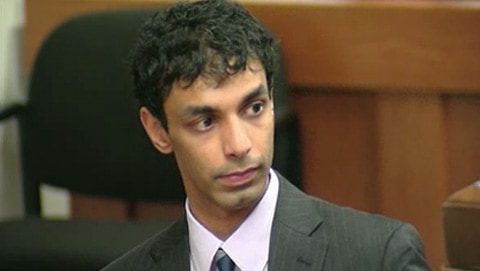
Dharun Ravi and the Debate Over the (In)Justice of Hate Crime Laws
Dharun Ravi, the former Rutgers student who spied on Tyler Clementi and contributed to Tyler's death, received a sentence of 30 days in jail and 3 years of probation. He is to perform 300 hours of community service, undergo counseling, and pay a $10,000 fine that will go to an organization providing assistance to victims of bias crimes. This sentence is significantly more lenient than the decade in jail Mr. Ravi could have received.
I agree with Nathaniel Frank over at the Huffington Post, who said that Mr. Ravi's behavior was "inexcusable." His actions surely contributed to Clementi's death" and "were malicious, irresponsible, dehumanizing, and criminal." And yet, like Mr. Frank, I was almost "relieved" to hear that Mr. Ravi would not face the maximum sentence. I would have been somewhat more satisfied with a few-month sentence rather than a one-month sentence, but that is not the point. In a previous, somewhat controversial prior column on the Tyler tragedy, I argued what Mr. Frank would argue later: That we have to be careful not to focus our search for justice solely on one individual where greater social forces are to blame and then prematurely congratulate ourselves and wash our hands of the responsibility to address those social problems once Mr. Ravi's trial is over.
Here's part of Mr. Frank's take, worded much more artfully than mine:
While Ravi must take responsibility for his actions, we are all accountable, not just him. Anti-gay sentiment lies deep within many, perhaps most, of us, as does an atavistic urge to denigrate and exclude out-group members. The fact that this may be our hardwiring -- evolved from a time when we lived in tribes of 50 to 100 closely related individuals -- in no way justifies indulging those impulses, but it does remind us that we have to fight against them rather than pretending they don't exist and acting like those who exhibit our darker side are outliers. And punishing one dumb kid for failing to rein in his dark side primarily serves to make us feel better when it shouldn't, to shift the burden of responsibility to anyone but ourselves. How did the 20-year-old Ravi grow up in a world where he thought any of this was OK and might even win him praise?
While Mr. Frank's column touches on the sociological forces that created the circumstances for Mr. Ravi to think that his disgusting behavior was permissible or normal, he mostly focuses on what it means to seek "justice" for Tyler, his family, and yes, even Mr. Ravi and his family. I would like to touch on that topic today.
The Tyler Clementi case, Mr. Ravi's trial, and the hate crime enhancements that could have sent Mr. Ravi to prison for a long time epitomize the tension between an emotional desire for retributive punishment -- the idea that bad acts deserve punishment for no other reason than the categorical view that bad acts deserve social condemnation -- and a smarter, case-by-case appreciation for the palliative or deterrent effect of the law. I argue that hate crime enhancements are almost exclusively retributive and their across the board application risks turning the criminal law into a tool of vengeance.
CONTINUED, AFTER THE JUMP...
Continue reading "Dharun Ravi and the Debate Over the (In)Justice of Hate Crime Laws" »


Recent Comments