01/02/2009
Gay Justice Appointed to South Africa's Highest Court
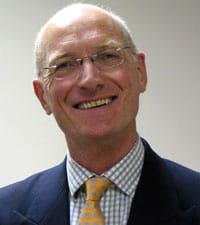
Edwin Cameron, a justice on South Africa's Supreme Court, has been appointed by South African President Mothlanthe to the Constitutional Court, the nation's highest court. Cameron has been particularly vocal on the subject of HIV/AIDS: "Praised by Nelson Mandela as 'one of South Africa's new heroes', Judge Cameron was the first judge to disclose that he was HIV-positive."
Hunter of Justice writes: "A former Rhodes Scholar who became a human rights lawyer, Judge Cameron is the co-author of several books, including Witness to AIDS, a memoir on his experiences as a person living with AIDS, and Defiant Desire: Gay and Lesbian Lives in South Africa. During his time on the Court of Appeal, he has been a leader in developing that nation's civil rights and liberties jurisprudence. Last summer, Judge Cameron addressed the International AIDS Conference in Mexico, arguing that homosexual sexual conduct should be decriminalized throughout the world, as a necessary step in fighting AIDS. (video here) He is the co-author (with Scott Burris - Temple Law) of a scholarly paper elaborating that argument."
According to the blog, Cameron is the first openly gay man or woman appointed to a nation's highest court.
Posted 6:09 PM EST by Andy Towle in News, South Africa | Permalink
Like it?
Subscribe to FREE Towleroad daily headlines with our RSS feed!
RECENT STORIES:
Comments
You can follow this conversation by subscribing to the comment feed for this post.


I actually think the South African method of selecting justices is quite sensible compared to our way of doing it (i.e. Bush picking the cleaning lady from down the hall + the U.S. Senate "judicial activism" side show).
In South Africa, the legal profession actually has a chance to weigh in on the nomination. And while Parliament has an important role to play in the process, it isn't nearly as partisan as in the United States because the government can't push through an unqualified candidate over the objections of the opposition and professionals.
Once the president nominates someone for an open seat on the Constitutional Court, the Judicial Service Commission hold what are essentially confirmation hearings. Each person on the commission has one vote. The commission consists of:
- Four judges (The Chief Justice of South Africa, the President of the Supreme Court of Appeal, and two others)
- Eleven members of parliament (The Minister of Justice, six MPs from the National Assembly, and four MPs from the National Council of Provinces).
Other than the Minister of Justice, the ten additional MPs must be evenly divided between the government and opposition parties. This effectively means the government only has a one vote advantage among the parliamentarians.
- Four lawyers (Two solicitors and two barristers chosen from the Bar Association)
Posted by: John in CA | Jan 3, 2009 4:15:08 AM
Wonderful news from an enlightened country!
Now, boys and girls, how many more years do you think will pass before we see an out justice on the U.S. Supreme Court?
Posted by: K | Jan 3, 2009 9:57:38 AM
Nice to hear some good gay news from anywhere in Africa these days.
And what I hear in general about South Africa usually isn't good -- AIDS, violence, poverty -- but at least the government has some things going for it.
Congratulations to Mr Cameron (& thanks for the mini-tutorial on South Africa's process, John in CA).
Posted by: Glenn I | Jan 3, 2009 6:37:28 PM
Does first mean first openly gay at the time of appointment?
Justice Michael Kirby was appointed to the high court of Australia in 1996. He came out publically in 1999.
Posted by: Sayke | Jan 3, 2009 7:57:39 PM
I am confused. I thought Edwin Cameron already WAS on South Africa's highest court?
Posted by: Mad Professsah | Jan 3, 2009 8:07:38 PM
Although we should continue to salute Justice Kirby's many achievements, his ability to foster substantive change is constrained by the Australian system of government.
The High Court of Australia has few powers. The fact that (1) Australia has no Bill of Rights and (2) the Australian judiciary isn't completely independent of the government means the High Court plays a very limited role. For example, the High Court cannot hear legal challenges to Australia's ban on same-sex marriage because there's no "right" to equal protection and due process per se. They have no jurisdiction.
South African courts have considerably more authority than their Australian counterparts. Under Chapter 2 of the South African constitution, the courts have broad discretionary powers to nullify any law deemed to violate civil liberties.
And Cameron is definitely getting a promotion. The teminology is a little confusing for Americans. The highest court in South Africa is the Constitutional Court.
Their Supreme Court isn't really all that "supreme." It is actually the equilvalent of our Circuit Court of Appeals. We have several of them (First Circuit, Second Circuit, Third Circuit, and so forth). Being a much smaller country, South Africa only has one.
Cameron was an appellate judge. Through this appointment, he's being elevated from the (not so) Supreme Court to the Constitutional Court.
Posted by: John in CA | Jan 3, 2009 9:07:37 PM
South Africa has one of the most gay friendly governments on the planet. During apartheid, the white controlled government was VERY homophobic. Now, under Africans, South Africa is non - homophobic.
Posted by: Mel Smith | Jan 4, 2009 6:02:45 PM