Best gay blog. Towleroad Wins Award

David Kato Hub


04/19/2007


PBS NewsHour Covers Danger for Gays in Uganda and Re-emergence of Anti-Homosexuality Bill: VIDEO
Uganda

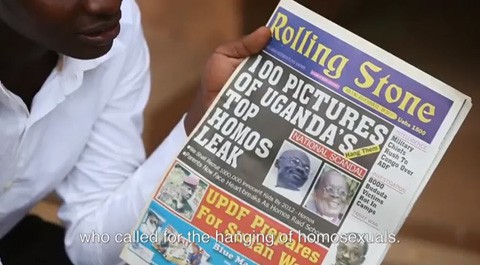
PBS NewsHour did an excellent 8-minute piece last night on the re-emergence of the "kill the gays" bill in Uganda, slain activist David Kato, anti-gay evangelizing by American 'Christianists' like Scott Lively, Hillary Clinton's statement to the UN urging rights for LGBTs in Africa and abroad, and the dangerous political atmosphere for gays now.

Watch, AFTER THE JUMP...

Here's a companion article:

The bill's re-emergence this year is a direct, defiant result of the recent Obama administration move to use foreign aid to push gay rights. "Gay rights are human rights," declared Secretary of State Hillary Clinton.

How Uganda's legislation fares this time around is anyone's guess. As journalists "parachuting in" to cover it, our recent experience may well serve as a proxy for how the legislation -- or homosexuality in general -- has become a third rail nobody wants to touch.

Continue reading "PBS NewsHour Covers Danger for Gays in Uganda and Re-emergence of Anti-Homosexuality Bill: VIDEO" »


Activists, Filmmakers Mark First Anniversary of David Kato Murder: VIDEO
Uganda

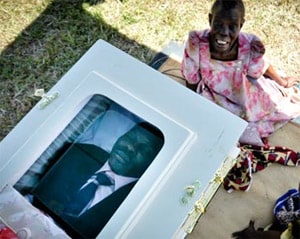
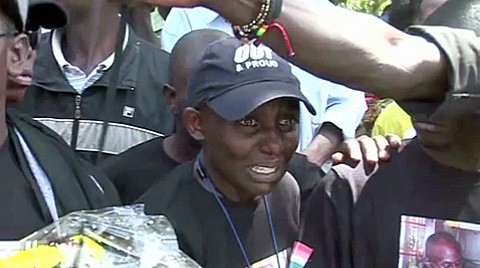
More than 100 Ugandan LGBT activists and family members gathered in Kampala today to mark the one year anniversary of the murder of the brave activist David Kato:

Gay rights activists speaking at the event called Kato, 46 at the time of his death, "the godfather" of the Ugandan gay movement and said that his passing had left a large void in the life of the country's gay community. "He always looked out for all of us even at times when we thought it was too difficult," Frank Mugisha, director of SMUG, said at the function in the garden of a hotel in central Kampala.

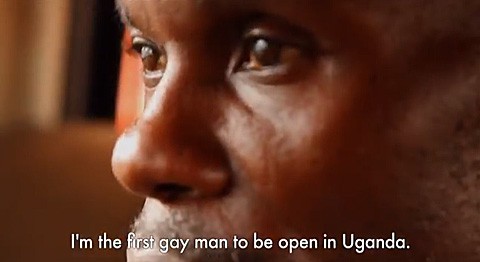
Katherine Fairfax Wright and Malika Zouhali-Worrall, the filmmakers behind Call Me Kuchu, a documentary on Kato and the Ugandan LGBT movement premiering February 11 at the Berlin Film Festival, have posted a touching piece on Kato and a clip from their documentary, on the NYT website:

During our first days in Kampala, a member of Parliament told us, “there is no longer a debate in Uganda as to whether homosexuality is right or not – it is not.” From what we knew of the pending Anti-Homosexuality Bill – which proposed death for H.I.V.-positive gay men and prison for anyone who failed to turn in a known homosexual – we were tempted to believe him.

But David showed us a different reality. Initially, he played something of a fixer, our main liaison with the L.G.B.T., or “kuchu” community. We soon realized, however, that the man known as the “grandfather of the kuchus” was one of the most outspoken and inspired activists in East Africa. The more time we spent documenting his work, the more evident it became that, contrary to the M.P.’s claim, David and his fellow activists were, in fact, generating real debate in Uganda. Kampala’s kuchus had begun to dismantle the country’s discriminatory status quo, and were working tirelessly to change their fate and that of others across Africa."

I posted about Kuchu last April while the filmmakers were still looking for funding on Kickstarter. I'm glad to see they found it, and turned in what looks like an incredible, important piece of film.

Watch the trailer for Call Me Kuchu, AFTER THE JUMP...

Continue reading "Activists, Filmmakers Mark First Anniversary of David Kato Murder: VIDEO" »


Murderer of Ugandan Gay Rights Activist David Kato Gets 30 Years
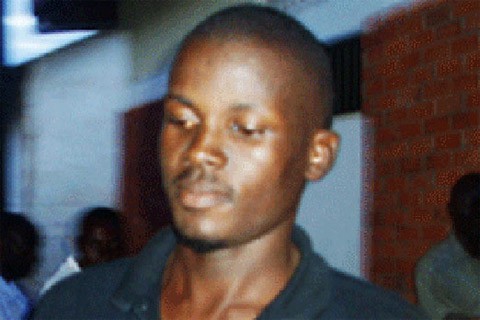
Enoch

The man responsible for the murder of Ugandan gay rights activist David Kato has been sentenced to 30 years in prison, the Africa Review reports:

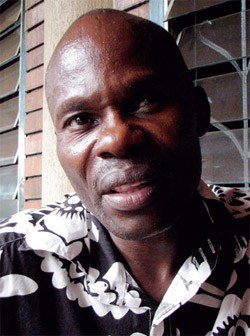
David_katoSidney Nsubuga Enoch (top photo), 22, committed the crime after Kato (right) repeatedly made sexual advances him, according to the prosecution evidence. The body of the deceased was discovered in a house by one Kizza Akram, who had earlier left the duo together.

The hunt for Nsubuga culminated in his arrest when he was spotted by residents in Mukono district, who alerted the police. He was arrested after which he admitted to the murder charges brought against him.

Efforts to reach leaders of Uganda’s gay community were futile as they are said to be out of the country to receive a special award recognising them for their struggle in the fight for gay rights in Uganda.

As the Africa Review mentioned, leaders of the Ugandan LGBT rights movement are in the U.S. to see Frank Mugisha receive the Robert F. Kennedy Human Rights Award in Washington today.

MugishaThe AP:

The 29-year-old Mugisha leads an underground group whose members routinely shift locations in Uganda for their safety. Uganda, a conservative East African nation, is one of more than 70 nations that have imposed laws against being gay.

Mugisha blames U.S. evangelical activists in particular for stoking fears and promoting homophobia with a 2009 visit and conference on "rehabilitation" for gays in Uganda. Since then, violence against gays has increased, he said.

It is the first time the award has been given to an activist working for LGBT rights.

More on Mugisha HERE.


Watch: Documentary on Struggle of Gays in Uganda
Uganda

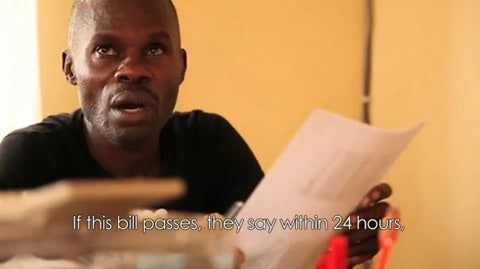
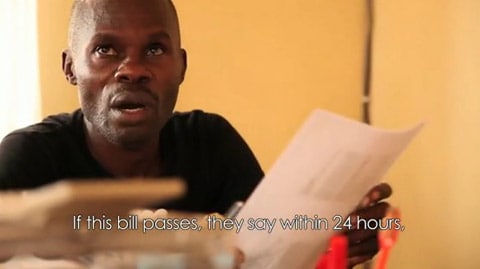
Here's a trailer for a fascinating-looking documentary on the oppression of gays in Uganda looking for funding on Kickstarter. Call Me Kuchu (kuchu is the Ugandan term for lesbian, gay, bisexual and transgender men and women) includes interviews with slain Ugandan LGBT activist David Kato and others prominent in that country's struggle.

"With unprecedented access to a tumultuous year – both hopeful and tragic –  for this small band of kuchus, Call Me Kuchu examines the astounding courage and determination required not only to battle an oppressive government, but also to maintain religious conviction in the face of the contradicting rhetoric of a powerful national church. As we paint a rare portrait of an activist community and its antagonists, our key question explores the concept of democracy: In a country where a judiciary increasingly recognizes the rights of individual kuchus, yet a popular vote and daily violence threaten to eradicate their rights altogether, can this small but spirited group bring about the political and religious change it seeks?"

Watch, AFTER THE JUMP...

Continue reading "Watch: Documentary on Struggle of Gays in Uganda" »


Wikileaks Cable Reveals Ugandan Mockery of Activist David Kato, Diplomatic Efforts to Fight 'Kill the Gays' Bill

A Wikileaks cable reveals U.S. concerns about the heightened atmosphere of homophobia in Uganda, particularly as it related to the "kill the gays" bill, and reveals the U.S. was working to combat teh still pending legislation.

Memos also reveal the danger posed to LGBT activists in the country, particularly David Kato, who was openly mocked at a UN consultative meeting in December 2009. Kato was beaten to death at his home last month.

The Guardian reports: Kato

In the cable, dated 24 December 2009, the diplomat claimed Ugandan politicians, including the author of the anti-homosexuality bill, David Bahati, had channelled anger at the country's socio-political failings into "violent hatred" of gays.

Other confidential memos sent between Kampala and Washington in 2009-2010 and sent to WikiLeaks paint a picture of a worsening human rights climate in the run-up to Ugandan elections Uganda's "chilling" descent from tolerance to violent homophobia and a deepening fear among gay activists, who claim they are being increasingly monitored and harassed. The memos, classified as confidential, also reveal US diplomatic attempts to combat the draconian bill – which is at the parliamentary committee stage.

Under the heading Comment: Homophobic Demagogues, the diplomat reports in the Christmas Eve cable that Bahati, a born-again Christian MP from the ruling party, had become "further isolated" following "recent condemnations" by high-profile Pastor Rick Warren and other US-based individuals who are against the bill. However, it was clear he would not yield to international pressure. Referring to Bahati, the diplomat said: "His homophobia … is blinding and incurable."

The diplomat refers also to James Nsaba Buturo, Uganda's minister for ethics and integrity, a strong supporter of the bill, and Pastor Martin Ssempa, who organises anti-gay rallies in Uganda, as key players ushering in a new era of intolerance.

At the UN consultative meeting described in the memos, David Kato was reportedly mocked at such a level it was difficult to hear his speech. Bahati and Ssempa were present at that meeting:

"Throughout his talk a member of the Ugandan Human Rights Commission 'openly joked and snickered' with supporters of the bill, the diplomat claimed in the cable."

There were grave concerns for the LGBT activists in the country:

"The diplomat said that, prior to the debate, he had received a text message from a gay activist expressing concerns for the safety of representatives scheduled to attend."

WikiLeaks cables: Ugandan gay rights activist 'mocked' at rights seminar [guardian] (via rex)


Ugandan Lesbian, Granted Asylum in UK, Speaks of Hope for Others After David Kato's Death

Prossy Kakooka, a Ugandan lesbian who was granted asylum in the UK, speaks about her experience:

Kato A lot happened to me in Uganda before I came to seek refuge here. I was imprisoned for being gay. I was also gang-raped, badly burned and beaten in a police station.

I managed to escape with the help of a family member. Naively, when I reached England I sighed in relief, thinking it was the end of my suffering and that I was going to be protected straight away – it never occurred to me that I was about to embark on the longest and toughest fight of my life. The asylum system is ruthless and can be very brutal.

When I arrived here I was in a bad way. Aside from the internal pain I sustained from the rape, the burns were at that stage where they become boils filled with fluids – when they burst it is the most excruciating pain. They were all over my legs and thighs. I went to an NHS walk-in centre and they were so shocked they refused to touch me. They called the police who, after hearing how I got my injuries, took me to a rape referral centre. I was not prepared for what happened next. After you have been badly violated, the last thing you want is prying hands, bright lights and people checking you over, even if I now know it had to be done.

I got a doctor's letter confirming that I had been raped, and that my injuries corresponded with what I was saying. The police took forensic photos as well. Despite all this, I was refused asylum: I was told that the Home Office agreed that I was gay and could not deny I was attacked because of the medical report, but that I had to go back and relocate to another part of Uganda. I had to go to court a number of times and was asked to give details of my rape – despite having medical reports available. It was like experiencing the attack over and over again. It was only after conducting a public campaign, with the help of some very kindhearted British people and others around the world who signed my online petition, that I managed to get asylum.

Prossy says that if anything good can come of LGBT activist David Kato's death, it is that more like her can escape the hideous persecution they are put through in Uganda.

David Kato has the power to help gay Ugandan people [guardian]


Towleroad - Blogged